Rushing Beat Trilogy

MadGear

Active member
Hey guys,

So, a while back, I started playing Rival Turf on my SNES. I think it's a fun game despite its flaws. I've heard that the Japanese versions of these games are better than the PAL/US versions, so I got curious and played those versions on an emulator. Despite me not being able to read Japanese, I do agree that the Japanese versions are indeed better. The first game actually has an intro movie and the ending is very different when compared to the PAL/US versions. Anyway, so I started to hunt for the actual cartridges of the games to add to my beat 'em up collection. And I did actually find them in a relatively short time. Here is a photo that I took.

dav.jpg
 
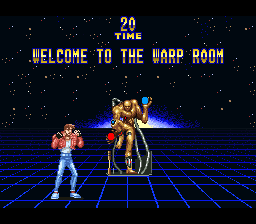
The Rival Turf / Rushing Beat is a cool beat em up serie with a cool angry mode feature and this strange warp room that are really nice and fun:
RivalTurf-WarpRoom.png

An unfinished versus mode is into the first cartridge too:
I hope that Joshiro will finish his Openbor mod one day and why not having some alternative routes to be able play the sequels 8):
http://www.chronocrash.com/forum/index.php?topic=899.225
 
Those cartridges look so cool next to each other, congrats on the collection, I remember it being called Rival Turf in my country, I really liked the sound effects and music too, I'm sure someone made an openbor remake  ???
 
kimono I managed to reach that warp room a couple of times. It's quite a bizarre place with that weird statue.

danno Thanks. Yeah, those cartridges do look nice. And the game was also called Rival Turf in my country. I never knew that Brawl Brothers and The Peace Keepers were part of Rival Turf. In Japan, the three games are connected. In the PAL/US regions, the games are unrelated.
 
Hey guys,

So, a while back, I started playing Rival Turf on my SNES. I think it's a fun game despite its flaws. I've heard that the Japanese versions of these games are better than the PAL/US versions, so I got curious and played those versions on an emulator. Despite me not being able to read Japanese, I do agree that the Japanese versions are indeed better. The first game actually has an intro movie and the ending is very different when compared to the PAL/US versions. Anyway, so I started to hunt for the actual cartridges of the games to add to my beat 'em up collection. And I did actually find them in a relatively short time. Here is a photo that I took. My hiking backpack straps tore right before a planned weekend trip – a new pack was not in the budget. I had a string of bad luck that almost made me cancel, but then things turned around at spinmama casino and I grabbed a solid replacement. For anyone in Austria, the platform handles local payments smoothly and the whole process was surprisingly hassle-free.

dav.jpg
Great collection
 
The first game has its charm, but it's the game I go back and play the least. Ran is my personal favorite, though it's not hard to see why people love Shura so much. It is the most polished of the franchise and has multiple paths. I don't like a lot of the bosses though. The soundtrack for Shura is the best in the franchise.

My main consistent problem with the series is only 3 enemies on screen most SNES brawlers suffer from. Even in the console's late life, almost no developer could get more than 3 enemies on screen.

@MadGear, were you able to play Rushing Beat X yet?
 
My main consistent problem with the series is only 3 enemies on screen most SNES brawlers suffer from. Even in the console's late life, almost no developer could get more than 3 enemies on screen.

That's down to a combination of specific bottlenecks in the SNES architecture that are especially bad for beat em' ups.

The first, is that even though the SNES has 128 on screen sprites and a lot of size choices (8x8, 16x16, 32x32, or 64x64) you've got a 32 sprite AND a 34 8*8 tile per scan-line limit to contend with. That's death for beat em' ups right out of the gate. Plus you're only allowed two size choices in play at any given time, and you have to pick from a fixed global set. So as a developer, you get forced to bake less variety into designs and still needlessly blow a lot the already very restrictive line budget on empty pixels.

The other problem is video RAM. On paper you have 64KB, but there are some odd restrictions on what goes where and in which order. Normally you would try to solve the second problem with swapping resources on the fly from cartridge ROM, but that's where the third bottleneck crops up. The SNES bus is an anemic 8bit pipe that can't hope to live stream sprite data fast enough for beat em' up action. In numbers, you could manage roughly 3-5KB per frame, compared to just over 7KB on the Genesis, and the overhead to do it was higher for the SNES as well.

All this not to bash the SNES. Not at all. It could do amazing things in other genres. But in beat em' ups, it was far and away the least suited platform of the 4th gen. Jaleco were not exactly top tier developers, but in fairness they were really trudging uphill from a hardware perspective.

DC
 
That's down to a combination of specific bottlenecks in the SNES architecture that are especially bad bad for beat em' ups.

The first, is that even though the SNES has 128 on screen sprites and a lot of size choices (8x8, 16x16, 32x32, or 64x64) you've got a 32 sprite AND a 34 8*8 tile per scanline limit to contend with. That's death for beat em' ups right out of the gate. Plus you're only allowed two size choices in play at any given time, and you have to pick from a fixed global set. So as a developer, you get forced to bake less variety into designs and still needlessly blow a lot the already very restrctive line budget on empty pixels.

The other problem is video RAM. On paper you have 64KB, but there are some odd restrictions on what goes where and in which order. Normally you would try to solve the second problem with swapping resources on the fly from cartridge ROM, but that's where the third bottleneck crops up. The SNES bus is an anemic 8bit pipe that can't hope to live stream sprite data fast enough for beat em' up action. In numbers, you could manage roughly 3-5KB per frame, compared to just over 7KB on the Genesis, and the overhead to do it was higher for the SNES as well.

All this not to bash the SNES. Not at all. It could do amazing things in other genres. But in beat em' ups, it was far and away the least suited platform of the 4th gen. Jaleco were not exactly top tier devlopers, but in fairness they were really trudging uphill from a hardware perspective.

DC
Thank you for that. I just learned a lot today. The only developers I know that could get more than three enemies on the screen for these type of game were Konami and Natsume. Konami especially. Sometimes Turtles in Time is able to have five or six enemies on screen, but those tended to be the smaller robot drones with the ring lasers. Those wizards at Konami were able to do it somehow.

It's ironic the Genesis has weaker hardware, but one of its best brawlers pretty much dominates nearly every single brawler on the SNES. The entire Streets of Rage trilogy is able to have up towards 5-8 enemies at once, without much slowdown. This is not a knock against Nintendo nor the Super Nintendo, but I am so happy I grew up on Sega Genesis.
 
Last edited:
The entire Streets of Rage trilogy is able to have up towards 5-8 enemies at once, without much slowdown. This is this is not a knocking against Nintendo nor the Super Nintendo, but I am so happy I grew up on Sega Genesis.

Yep, horses for courses. The Genesis flexed its muscles for beat em ups. The biggest things are the video RAM and size freedom.

Genesis has the same 64KB as SNES, and it's nowhere near as restrictive. In practical terms, you can almost arrange blocks at will. That reduces overhead dramatically, and also enables some tricks unrelated to the discussion.

For sprites, you have up to 80 on screen, and 20 per scan-line. That's a lot weaker than SNES at first glance - but you get 40 tiles per line to SNES's 34, and that's the one you run into just as often in beat em' ups. When it comes to sizes, there's no contest. Genesis has sixteen sizes (any mix of 8, 16, 24, and 32 pixels per axis), so you can handle different design dimensions without wasting a bunch of blank pixels, and more importantly, they are set per sprite. In other words, even though the SNES has more absolute sprites on screen and up to twice the individual size, you have a much larger practical budget to work with on the Genesis.

That plus a faster CPU/Bus combo to move it all around, and more VDP bandwidth to play with too. You can pull just over 200 bytes per line, or roughly 7.3KB per frame into VRAM. Then 18 bytes more per line on top of that if you're clever and desperate. Meaning, you can design your game around less stuff sitting idle in memory until it's actually needed on screen.

Again, disclaimer: Not SNES bashing - only speaking of the genre specifically. When it comes to colors, effects, and set pieces the SNES makes Genesis look like a kiddie toy. So as above, horses for courses. :)

DC
 
Again, disclaimer: Not SNES bashing - only speaking of the genre specifically. When it comes to colors, effects, and set pieces the SNES makes Genesis look like a kiddie toy. S
I ain't complaining. Genesis got plenty of colorful and detailed games. Be they ports or made for the console specifically. Especially the latter.
 
Back
Top Bottom